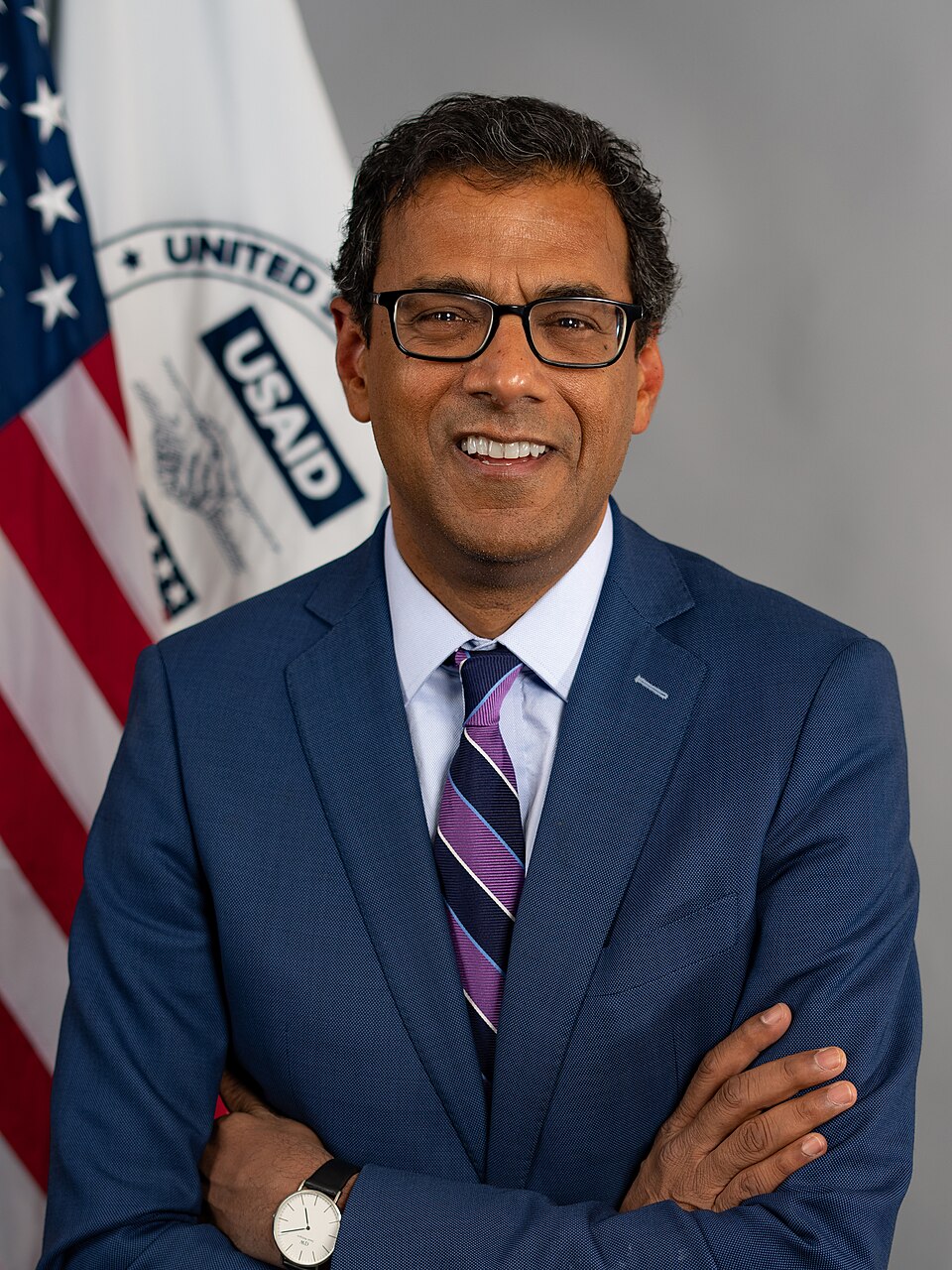
Portrait: USAID via Wikimedia Commons, Public Domain
Atul Gawande
Atul Gawande is a surgeon at Brigham and Women's Hospital, professor at Harvard Medical School, and staff writer at The New Yorker whose work examines how systems thinking, checklists, and institutional design can close the gap between what medicine knows and what it consistently delivers.
について
Atul Atmaram Gawande was born on November 5, 1965, in Brooklyn, New York, and grew up in Athens, Ohio, where his parents — both physicians — had immigrated from India. He studied political science at Stanford, earned his medical degree from Harvard Medical School, and completed a surgical residency at Brigham and Women’s Hospital, where he has practiced general and endocrine surgery since. He also holds a Master of Public Health from the Harvard T.H. Chan School of Public Health.
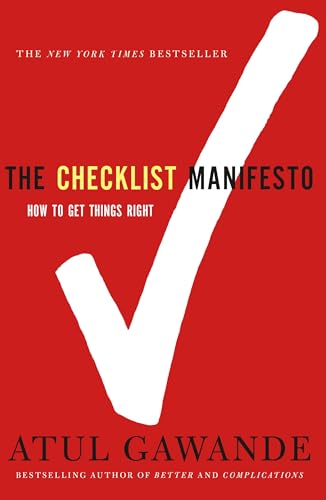
Gawande joined The New Yorker as a staff writer in 1998, and his essays on medicine — combining clinical detail, narrative drive, and policy argument — became the template for a generation of medical writing. His first two books, Complications (2002) and Better (2007), established his method: take a problem that medicine knows it has, trace the mechanism behind it, then ask what the best performers do differently. The Checklist Manifesto (2009) extended that method into a generalizable framework — not just for surgery but for any complex professional domain where the gap between knowing and doing costs lives. The WHO Surgical Safety Checklist, which Gawande helped design and test across eight hospitals on four continents, reduced surgical deaths by 47% and major complications by 36% in the landmark 2009 New England Journal of Medicine study.
Being Mortal (2014), his most personal book, examined how medicine fails dying patients by optimizing for survival over quality of life. It became a national conversation and was adapted into a documentary. Beyond writing, Gawande co-founded Ariadne Labs, a health systems innovation center jointly run by Brigham and Women’s Hospital and the Harvard Chan School, which focuses on scaling evidence-based practices in surgery, childbirth, and end-of-life care globally. In 2018 he was named CEO of Haven, the Amazon–Berkshire Hathaway–JPMorgan healthcare venture, stepping down in 2020 when the venture dissolved. He served as Assistant Administrator for Global Health at USAID beginning in 2021.